
Carbon monoxide (CO) is a silent and dangerous hazard that can affect anyone-homeowners, tenants, guests, and technicians alike. Awareness of CO sources, risks, and prevention is essential to ensure safety in any environment where fuel-burning appliances are used.
Carbon monoxide is a colorless, odorless, and tasteless gas produced by the incomplete combustion of fuels. It is highly toxic to humans and animals, with exposure capable of causing serious health issues or even death.
SOURCES AND PREVENTION
Common sources of CO include heating appliances, fireplaces, and cooking equipment. Preventing CO exposure begins with proper maintenance and awareness:
- Ensure all venting for heating equipment is clear of obstructions such as snow, vegetation, fencing, or landscaping.
- Install and regularly test carbon monoxide detectors in homes and buildings.
- Use gas grills outdoors only, never in garages or enclosed porches.
If you use propane-fueled appliances in your home, it’s important to understand how carbon monoxide can form. The propane industry’s official safety authority — the Propane Education & Research Council (PERC) — provides detailed guidance on propane safety, carbon monoxide prevention, and how to keep your home protected.
HEALTH EFFECTS
CO exposure affects the body differently depending on concentration:
- 10-25 PPM: Long-term exposure can have lasting health effects. (PPM/Parts Per Million)
- 100-200 PPM: May cause dizziness, headaches, and nausea.
- Higher levels: Can lead to unconsciousness or death if untreated.
Treatment for CO poisoning ranges from moving the affected individual to fresh air, administering oxygen, or in severe cases, treatment in a hyperbaric chamber at specialized facilities. Immediate assistance should be sought through 911 or poison control.
TOOLS FOR SAFETY
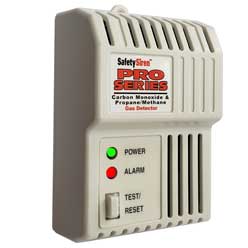
For added protection, homeowners can purchase online or at their local home improvement store a Carbon Monoxide Detector. There are a variety of units with some offering a combination Propane, Methane, Butane, and Carbon Monoxide. These are easy to use just a110V plug in.
By understanding the risks, following proper safety procedures, and using the right tools, CO exposure can be effectively prevented-helping ensure a safe environment for both homeowners and the professionals who service their equipment.