Cathodic Testing
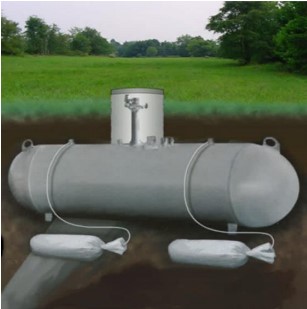
Cathodic Testing in Underground Propane Tanks
Cathodic Testing is a certified test done on underground propane tanks to test the tank's capability to withstand corrosion in the ground. When preparing your underground propane tank, knowing and understanding the benefits of cathodic testing is esstential.
Regulation
According to the NFPA (National Fire Protection Agency) 58 LP-GAS codes, the industry benchmark for propane storage , handling, transportation, and use, cathodic testing must be done at least every 36 months.
Above-Ground Tank
Regardless of its size, any ASME (American Society of Mechanical Engineers), container filled on site must be located so that the filling connection and fixed maximum liquid level gauge are at least 10 feet from any external source of ignition intake to a direct-vented gas appliance or intake to a mechanical ventilation system.
This distance can be reduced to no less than 10 feet for a single container of 1200-gallon water capacity or less, provided such container is at least 25 feet from any other LP-Gas container of more than 125-gallon water capacity.
Below-Ground Tank
The relief valve, filling connection, and fixed maximum liquid level gauge vent connection at the container must be at least 10 feet from any exterior source of ignition, openings into direct-vent appliances, or mechanical ventilation air intakes. No part of an underground container can be less than 10 feet from a substantial building or line of adjoining property that can be built upon.